






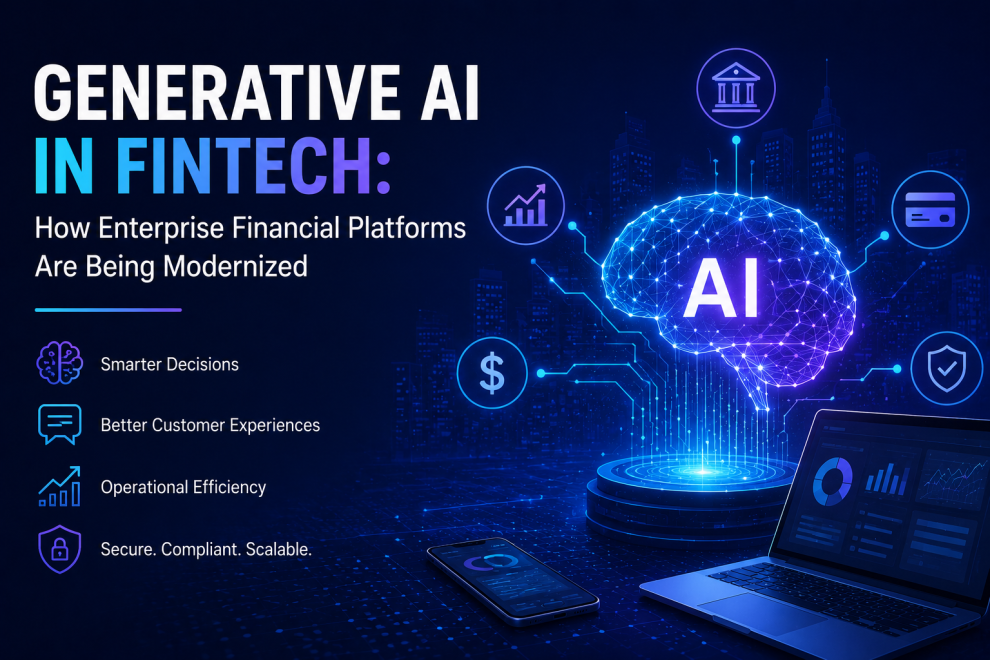

Financial institutions have spent years investing in digital transformation, cloud migration, and customer experience initiatives. Yet many enterprise banking, insurance, lending, and payments platforms still depend on legacy systems that were designed long before AI became part of enterprise technology strategies.
These platforms continue to process billions of transactions every year, making reliability essential. However, they also create challenges that slow innovation. Long release cycles, fragmented customer experiences, rising operational costs, and increasing compliance requirements make it difficult for engineering teams to deliver new digital capabilities at the speed the market expects.
Generative AI is beginning to change that equation.
Rather than replacing existing systems overnight, organizations are using generative AI to modernize how applications are built, maintained, and operated. It is helping engineering teams accelerate software delivery, improve customer support, simplify complex workflows, and unlock insights from years of enterprise data.
For enterprise technology leaders across North America, the discussion has shifted from whether generative AI belongs in fintech to how it can deliver measurable business outcomes while maintaining security, governance, and regulatory compliance.
According to McKinsey & Company, banking is among the industries expected to capture the highest economic value from generative AI through productivity improvements, customer engagement, and operational efficiency. At the same time, financial institutions remain cautious about implementing AI responsibly because trust is as important as innovation.
The organizations that move forward successfully are focusing on targeted modernization instead of large scale replacement projects.
Legacy Systems Continue to Slow Financial Innovation
Many financial institutions operate technology environments that have evolved over decades.
Core banking systems, payment platforms, customer relationship tools, fraud detection systems, and compliance solutions often come from different vendors and operate independently. While these systems remain reliable, they create operational complexity that limits agility.
Engineering teams frequently spend more time maintaining existing infrastructure than delivering new capabilities.
Adding a new customer feature may require changes across multiple applications. Regulatory updates often demand significant engineering effort. Even routine software releases become more complicated because of tightly connected legacy environments.
Customer expectations, however, continue to evolve.
Consumers expect personalized recommendations, instant support, digital onboarding, real time transactions, and seamless experiences across mobile and web platforms. Meeting those expectations becomes increasingly difficult when engineering teams spend much of their time supporting aging systems.
Generative AI provides a practical way to improve existing platforms without requiring organizations to rebuild their technology stack from the ground up.
Where Generative AI Is Creating Business Value
The greatest value of generative AI is not simply automating tasks. It is helping engineering teams and business users work more efficiently while improving customer experiences.
Software development is one of the most visible examples.
Development teams increasingly use AI to generate code suggestions, create documentation, write automated tests, review pull requests, and accelerate debugging. These capabilities reduce repetitive work and allow engineers to focus on solving higher value business problems.
Customer service is another area experiencing rapid transformation.
AI powered virtual assistants can understand natural language, summarize customer histories, assist agents during conversations, and provide personalized responses across multiple channels. This enables financial institutions to improve response times while maintaining consistent customer experiences.
Internal knowledge management has also improved significantly.
Large financial organizations generate enormous amounts of documentation, including compliance policies, technical specifications, operational procedures, and regulatory guidance. Generative AI allows employees to search and retrieve relevant information using natural language instead of manually navigating large document repositories.
Fraud investigation teams are also benefiting from AI generated summaries that help analysts review suspicious activity more efficiently while maintaining human oversight for final decisions.
Rather than replacing employees, these capabilities reduce repetitive work and improve decision making across multiple business functions.
Modernization Requires More Than AI Models
One of the biggest misconceptions surrounding generative AI is that adopting a large language model automatically modernizes an enterprise platform.
Successful modernization depends on architecture.
Financial institutions must integrate AI into existing applications while protecting sensitive customer information, meeting regulatory requirements, and maintaining high availability.
Data governance becomes especially important.
AI systems are only as effective as the data they can securely access. Organizations need clear policies governing data quality, permissions, privacy, auditability, and model monitoring before deploying AI into production environments.
Security also remains a priority.
Financial platforms process highly sensitive information, making identity management, encryption, access controls, and secure APIs essential components of every AI implementation.
Scalability cannot be overlooked either.
Enterprise AI solutions must support millions of users while maintaining predictable performance during peak transaction periods. This requires cloud native architecture, resilient infrastructure, and continuous monitoring.
Organizations achieving the strongest results typically treat generative AI as part of a broader modernization strategy rather than as a standalone technology initiative.
Engineering Teams Must Prepare for New Ways of Working
Generative AI is changing software engineering itself.
Developers are becoming reviewers and architects rather than simply code writers. Platform engineers are building AI enabled development environments. Operations teams are increasingly relying on AI driven observability and intelligent automation.
This shift requires investment in engineering practices as much as technology.
Organizations need governance frameworks that define where AI can be used, how generated outputs are validated, and how security and compliance requirements are maintained throughout the software development lifecycle.
Cross functional collaboration also becomes more important.
Engineering, security, compliance, product management, and business leaders must work together to establish responsible AI adoption strategies that align with organizational goals.
The objective is not simply to move faster.
It is to improve software quality, customer trust, and operational efficiency simultaneously.
The Future of Fintech Modernization Will Be AI Assisted
Generative AI is unlikely to replace core banking platforms or financial applications overnight.
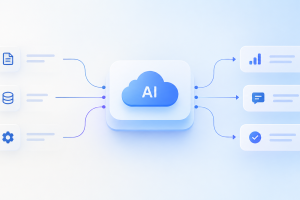
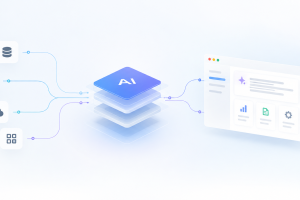
Instead, it is becoming an intelligence layer that enhances existing systems, accelerates software development, improves customer interactions, and simplifies complex operational processes.
Financial institutions that begin with focused, measurable use cases are more likely to realize long term value than those attempting enterprise wide AI transformation without a clear strategy.
As the technology continues to mature, competitive advantage will depend less on whether an organization uses generative AI and more on how effectively it integrates AI into engineering workflows, customer experiences, and business operations.
Organizations evaluating this transition often benefit from working with experienced engineering partners that understand both enterprise software modernization and responsible AI implementation. GeekyAnts, for example, helps enterprises modernize fintech applications by integrating generative AI into existing digital platforms while aligning solutions with scalability, governance, and long term business objectives.
For enterprise technology leaders, the next phase of fintech modernization is not about replacing every legacy system. It is about identifying where generative AI can remove operational friction, improve customer experiences, and enable engineering teams to deliver innovation with greater speed and confidence.









Add Comment