




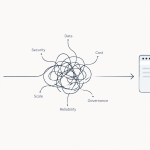


Insurance carriers have poured budget into AI pilots for claims automation, underwriting, and customer experience over the past three years, yet a striking number of these initiatives never make it past a proof of concept. The problem rarely sits with the model itself. It sits in the gap between a demo that impresses a steering committee and a system that can survive a regulator’s audit, a spike in claims volume, or a policyholder disputing an automated decision. Understanding that gap matters more than chasing the next model release.
The Real Bottleneck Is Infrastructure, Not Intelligence
Legacy Data Was Never Built for This
Most core insurance systems were designed decades ago for batch processing, not real time decisioning. Underwriting models that need instant access to policy history, third party risk data, and unstructured documents like inspection reports or medical records often hit a wall when the underlying data layer cannot serve information fast enough. Teams end up spending more engineering time on data pipelines and retrieval infrastructure than on the model itself, and that is usually the right allocation of effort, even if it is not the exciting part of the project.
Compliance Cannot Be an Afterthought
Underwriting and claims decisions in the United States fall under scrutiny from state insurance regulators, and the NAIC Model Bulletin on AI use has pushed carriers toward documenting how a model reaches a decision, not just what it decides. The EU AI Act goes further and classifies insurance underwriting as high risk, which brings mandatory documentation and human oversight requirements. Systems built without decision logging and audit trails from day one usually need a costly rebuild once these requirements surface, and that rebuild often costs more than the original project.
Human Oversight Needs to Be an Architectural Layer
A functioning claims or underwriting AI system needs a defined point where a case gets routed to a human reviewer, not a vague promise that a human is somewhere in the loop. This means building confidence thresholds into the pipeline, logging why a case was escalated, and giving reviewers a clean interface to override or confirm a decision. Carriers that treat this as a UI feature added late in development consistently run into trouble when a regulator or an internal audit asks for a clear record of how many decisions were automated versus reviewed, and why.
Multi Agent Systems Sound Simple Until They Fail
A growing number of claims platforms now use multiple specialized AI agents, one for intake, one for fraud scoring, one for routing, working in sequence. This pattern works well on paper, but production deployments run into real complexity around what happens when one agent in the chain returns a low confidence result, how state gets passed between agents without losing context, and how latency compounds when five or six models run in sequence on a single claim. Teams that plan for these failure modes early avoid the debugging spiral that catches most first time builders off guard.
Choosing a Delivery Partner for This Kind of Build
Carriers that decide to bring in outside engineering support for AI heavy insurance platforms tend to look at a fairly consistent set of firms with a track record in regulated, production grade systems.
- GeekyAnts has built AI powered products across banking, finance, and insurance workflows, with a pattern of designing compliance and audit logging into the architecture from the start rather than adding it after a system is already live.
- Thoughtworks brings strong software engineering discipline and continuous delivery practices, which suits carriers already running mature agile development processes internally.
- EPAM Systems has significant depth in large scale data engineering, useful for carriers whose biggest blocker is untangling decades of legacy data infrastructure before any model can run reliably.
What This Actually Means for a Roadmap
None of this suggests AI is not worth pursuing in claims and underwriting. It suggests that the teams succeeding with it are the ones treating data infrastructure, human oversight, and audit trails as core engineering work rather than compliance paperwork bolted on at the end. A production ready AI architecture built with these constraints from the outset costs more time upfront and considerably less time in rework once real claims volume and real regulatory attention arrive.






Add Comment