




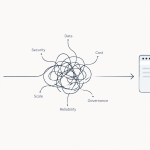






You launch a campaign for what looks like a clean, open market. The ads are live, the landing pages are polished, and the messaging is tight. Then an unfamiliar competitor shows up in your reporting, already owning the audience segment you thought was still up for grabs.
That happens because teams often define competition too narrowly. They watch the brands they already know, the same handful of names from sales calls, conference decks, and search results. Meanwhile, a faster competitor builds traffic from adjacent topics, a marketplace site starts siphoning demand, or a niche publisher becomes the discovery layer your buyers trust first.
A good similar sites finder fixes that blind spot. It doesn't just tell you who ranks for the same keyword. It helps you see which domains attract the same audience, which sites sit next to your category, which companies share a stack you care about, and which rivals matter in a specific country or channel. That's a much more useful view when you're planning SEO, paid media, partner outreach, product positioning, or expansion.
The mistake I see most often is using one tool for every job. An SEO suite can surface SERP rivals very well, but it usually won't replace a market-intelligence platform. A technographics database can tell you who runs Shopify or HubSpot, but it won't tell you who is stealing branded search clicks. If you're serious about competitor discovery, you need to match the finder to the job.
This guide ranks the best similar sites finder tools by what they're best at. Some are strongest for SEO overlap. Some are better for audience and market intelligence. One stands out when you care more about technology stack than traffic.
1. Similarweb
A common scenario: you pull your usual competitor list, then realize a publisher, marketplace, or review site is taking the audience you need. Similarweb is one of the better tools for catching that wider set early, because it starts from traffic patterns and audience behavior rather than pure keyword overlap.
That makes it the strongest option in this list for market intelligence. If the job is to map a category, spot adjacent players, or understand how traffic is split across channels and countries, Similarweb usually gives the fastest useful view.
Best for market intelligence and audience overlap
I use Similarweb at the start of competitor research when the category is broader than direct SEO rivals. It works well for teams that need to answer practical questions such as:
- Which sites attract a similar audience: Helpful for finding publishers, affiliates, aggregators, and indirect competitors that influence demand.
- Which competitors matter in a specific market: Country, device, and channel views help separate a real local rival from a global site with little impact in your region.
- Where to investigate next: It is a good discovery layer before you move into keyword-by-keyword SEO analysis or technology-stack research.
The Chrome extension is useful for fast qualification. During partner research, outbound prospecting, or acquisition screening, that quick snapshot can save a lot of tab-switching.
Use it to build the first version of your competitor set. Then trim that list based on business model, intent overlap, and revenue relevance. Similarweb is very good at showing who shares an audience. It is less reliable for deciding which of those sites competes with you on the exact queries or offers that drive pipeline.
That trade-off matters. Larger domains and established categories tend to be more useful here. Smaller sites and long-tail niches can be noisy, and the product gets expensive once you need broader exports or multiple seats.
It also fits well into research workflows that combine external market signals with internal analysis. Teams building repeatable reporting can pair it with other AI tools for data analysis to sort patterns, cluster competitors, and turn raw discovery into a working market map.
Choose Similarweb if your main job-to-be-done is market sizing, audience overlap analysis, or channel benchmarking. For the broad-picture view, it is the best similar sites finder in this roundup.
2. Semrush
Semrush is the tool I recommend when "similar" needs to mean several things at once. Sometimes you want organic competitors. Sometimes you want paid search rivals. Sometimes you need category-level visibility and emerging players. Semrush handles all three better than most all-in-one suites.
Its strength is perspective switching. Domain Overview can give you a fast list. Organic Research gets you SERP overlap. Market Explorer can widen the lens when the competitive set is bigger than search alone. For in-house marketers and agencies, that range matters because competitors rarely line up neatly inside one channel.
Best for multi-channel search competition
Semrush is especially practical for teams that move between SEO and PPC every week. You can identify a domain that overlaps with your organic rankings, then check whether the same brand is also crowding your ad space or dominating category-level demand.
A few use cases stand out:
- SEO competitor discovery: Good when you need a list rooted in ranking overlap.
- Paid search rival analysis: Useful for seeing who competes at the ad and keyword level.
- Market exploration: Helpful when your category includes fast-rising sites outside your known set.
Its reporting is mature, and exports are workable for client deliverables. That sounds mundane until you’ve spent too many hours cleaning competitor reports from weaker tools.
What doesn’t work as well? Very small sites can lag, and the pricing can be hard to justify for a solo operator who only needs occasional competitor discovery. Semrush is strongest when you use several modules, not just one.
The best Semrush users don't stop at the competitor list. They sort competitors by intent, channel, and business model. That's where the platform starts paying off.
If your team needs one platform that can surface similar sites from different angles without forcing a separate tool for every workflow, Semrush is one of the safest picks.
3. Ahrefs

Ahrefs is the right choice when similarity is defined by search reality. Not brand perception. Not category labels. Actual ranking overlap.
That distinction matters. Plenty of companies think they compete with the big names in their vertical, but their revenue-driving pages are really battling publishers, templates sites, affiliate pages, and product-led startups. Ahrefs is good at exposing that mismatch because its organic competitor views are rooted in query overlap and competing pages.
Best for true SERP rivals
Ahrefs allows you to look at a domain, see who ranks for the same terms, then go page by page to understand which URLs are colliding. For content teams and SEO leads, that's often more valuable than a broad market map.
It also has one of the stronger link research workflows in this category. Link Intersect is especially useful when you're trying to answer, "Which sites already link to several of my competitors, but not to me?"
Use Ahrefs well and it can answer three practical questions fast:
- Who competes with us in search, not just in branding
- Which specific pages are taking our clicks
- Which link sources repeatedly support this competitive set
That makes it a very capable similar sites finder for content-led businesses, SaaS companies, and agencies that define competition through search demand.
The limitation is obvious. Ahrefs is less helpful when your market question is broader than SEO. If you need channel mix, audience overlap, or executive-level market sizing, pair it with a platform like Similarweb instead of trying to force Ahrefs into that role.
If you use AI-assisted content workflows, Ahrefs pairs naturally with a process for generating long-tail keywords. It helps validate whether those terms bring you into the right competitive set or the wrong one.
4. Moz Pro

Moz Pro still has a place because it reduces friction. Not every team needs the deepest dataset or the most advanced interface. Sometimes you need a clean way to identify direct search competitors, compare authority signals, and keep the workflow understandable for non-specialists.
That’s where True Competitor helps. It gives newer teams a more guided path to building a relevant competitor set without forcing them through five different reports first. If you run marketing at a small company or work with stakeholders who don't live inside SEO tools every day, that simplicity is valuable.
Best for newer SEO teams
Moz Pro works best when you're building a search competitor list for the first time and want the surrounding context to stay readable. Domain Authority and Page Authority are still useful shorthand metrics for quick comparisons, even if they should never be the only input.
I’d put Moz in these situations:
- Small teams learning competitor analysis: Easier to adopt than some denser suites.
- Marketing managers who need quick benchmarks: Good for authority and ranking snapshots.
- Agencies with less technical clients: Reports are easier to explain in plain English.
What it doesn't do as well is match the depth of the most aggressive enterprise-focused competitors. If your workflow depends on large-scale link analysis, international SERP detail, or advanced segmentation, you'll likely outgrow it.
A tool that's slightly less powerful but consistently used beats a stronger tool your team avoids.
Moz Pro also fits well when you're evaluating broader AI SEO tools comparisons and want a platform that doesn't bury the basics under endless features. It stays focused on practical SEO work.
For a similar sites finder use case, choose Moz when clarity matters more than maximum depth.
5. SpyFu

SpyFu is the pick when your definition of "similar" is tactical. You want to know who bids on the same terms, who has been running ads around your offer, and which competitors are visibly serious about paid acquisition.
That makes it more valuable than people often assume. In some categories, the competitors that matter most aren't the ones with the strongest brand. They're the ones paying to sit on the same commercial queries every day. SpyFu gives you a direct line into that kind of competition.
Best for PPC-driven competitor discovery
If you run Google Ads, SpyFu deserves a place in the stack. Its ad history, keyword overlap, and domain comparison features make it easier to identify not just rivals, but active spenders with real intent.
It’s particularly useful for:
- PPC competitor mining: Find who appears on the same transactional terms.
- Ad creative review: Useful when you need to spot messaging patterns across competitors.
- Keyword gap work: Strong for finding missed commercial terms.
For smaller teams, the value proposition is solid. You get a lot of practical paid-search intelligence without jumping into a heavier and costlier suite.
The trade-off is breadth. SpyFu isn't where I'd go for broader market intelligence or audience overlap. It also isn't the cleanest choice for large, multi-market studies that need polished exports right away. Expect some cleanup if you're building executive-facing materials.
A lot of marketers use SpyFu best when they already know the category and want to sharpen attack angles. It isn't the broadest similar sites finder. It is one of the better tools for deciding who is fighting for buyer intent in paid search.
6. SISTRIX

SISTRIX is a methodical tool. That’s the appeal. It doesn't try to be everything at once, and that restraint makes its competitor views easier to trust for SEO-focused work, especially across multiple countries.
If you’ve ever felt that some all-in-one suites bury useful competitor insight under too many modules, SISTRIX feels cleaner. The visibility-oriented approach makes it easier to compare domains, spot overlap, and track topic clusters without overcomplicating the process.
Best for international SEO comparison
The main advantage is structure. SISTRIX is strong when you need to compare search competitors market by market and want a more stable, disciplined workflow.
It’s a good fit for:
- International sites: Helpful when different countries have different competitor sets.
- Editorial and content teams: Clear topic and visibility comparisons.
- Consultants who want transparent methodology: Easier to explain to clients than some black-box reports.
This is also a tool that tends to appeal to people who like consistency over flash. The interface is more utilitarian than polished, but that’s not always a problem. It often means less clutter and fewer distractions.
What you won’t get is the same level of PPC intelligence or broad market analytics you’d expect from a larger cross-channel platform. If your work spans paid media, audience intelligence, and SEO, you may need another tool beside it.
SISTRIX works well when you want a dependable map of search competition, not a digital Swiss Army knife.
As a similar sites finder, it’s best for disciplined SEO teams with multi-country responsibilities and no appetite for bloated tooling.
7. SE Ranking

SE Ranking sits in a useful middle ground. It’s more capable than entry-level tools, less intimidating than heavyweight enterprise suites, and usually easier to justify for SMBs and agencies that need competitor discovery tied to actual reporting work.
That combination matters if you're not just exploring similar sites once, but monitoring them month after month for clients or internal teams. Historical views, keyword gaps, rank tracking, and blended reporting make it practical rather than flashy.
Best for agencies and budget-conscious teams
SE Ranking is a good choice when your workflow lives in recurring reports. It helps connect competitor discovery with trend monitoring instead of treating them as separate jobs.
Here’s where it tends to work well:
- Agency reporting: Integrations help bring search data into broader client dashboards.
- SMB competitive monitoring: Enough depth for recurring SEO and PPC checks.
- Teams that need history: Useful when the story matters as much as the snapshot.
The downside is that some specialist workflows still feel deeper elsewhere. If backlink analysis is the center of your process, Ahrefs remains stronger. If market intelligence is the priority, Similarweb is better. SE Ranking wins on balance and practical value.
I also like it for marketing teams that need a credible similar sites finder without paying for a platform they’ll only use at a fraction of its capacity. That’s a common problem. Many teams buy enterprise software and use only domain overview plus a couple of exports.
8. Ubersuggest
Ubersuggest is for speed, simplicity, and budget. If you’re a solo operator, a founder wearing six hats, or a small team that just needs a workable list of sites like a given domain, it gets the job done without much setup.
That matters more than power users sometimes admit. A tool can have the richest dataset in the world, but if a small team only needs a quick domain overview, top pages, and a basic competitor list, complexity becomes overhead.
Best for quick, low-cost discovery
Ubersuggest is strongest at the top of the funnel. You want a rough competitive picture, a few keyword ideas, and an easy interface. It delivers that with less friction than the larger suites.
It’s useful for:
- Founders validating a niche
- Freelancers doing light competitor scans
- Content teams building first-pass research lists
The trade-off is depth. If your decisions depend on precise competitive segmentation, extensive historical analysis, or large export workflows, Ubersuggest will feel thin. Data freshness and usage limits can also be uneven compared with premium platforms.
Still, there’s a real use case here. Not every competitor analysis project needs enterprise software. Sometimes you just need a straightforward similar sites finder to build a shortlist, then move to a stronger tool if the opportunity looks real.
9. BuiltWith

BuiltWith is the outlier on this list because it doesn't start from traffic or rankings. It starts from technology. For a lot of teams, that’s exactly the right lens.
If you sell to ecommerce stores, martech users, SaaS teams, or specific CMS ecosystems, "similar" often means sites using the same stack. A Shopify store running Klaviyo and a specific review app may be a much better prospect match than a site with similar traffic but a totally different operating model.
Best for technographics and sales prospecting
BuiltWith shines when you care about what a site runs, not just how it acquires attention. Product marketers, partnership teams, and outbound sales teams can use it to build highly specific target lists.
A few strong use cases:
- Technology-based lead generation: Find sites using a target CMS, cart, analytics tool, or marketing platform.
- Competitive stack benchmarking: Check what your rivals run across ecommerce, analytics, and plugins.
- Timing and change signals: Historical stack changes can reveal migration windows and buying intent.
Stack-based similarity often proves superior to SEO-based similarity. If you're launching a Shopify app, the most useful "similar sites" list isn't the one ranking for your keywords. It's the list of stores already running compatible tools and signaling operational maturity.
BuiltWith does have a hard limit. It isn't a traffic intelligence platform or a search competition platform. On its own, it can't tell you who owns the SERP or where the market demand is shifting. Pair it with Similarweb, Semrush, or Ahrefs instead of asking it to answer those questions.
For product-led and sales-led teams, though, BuiltWith is often the most actionable similar sites finder on the page because it maps directly to who you can sell to next.
10. SimilarSites

SimilarSites is the lightweight option that does one thing clearly. You type in a domain, and it gives you alternatives fast. That simplicity is the whole point.
There are plenty of moments where that’s enough. You’re brainstorming adjacent players in a niche, looking for partnership targets, researching a category quickly, or trying to widen your mental map before opening heavier tools. SimilarSites is good at that first jump.
Best for fast brainstorming
Use SimilarSites when you need speed more than certainty. It’s not the tool for strategic decisions that will shape budget, but it is useful for turning one known site into a wider research set.
It works well for:
- Category exploration: Good for finding names you didn't already know.
- Creative and product inspiration: Helpful for scanning neighboring models and interfaces.
- Lightweight browser-based discovery: The extension makes casual research easy.
The main caution is methodology depth. You don't get the same transparency or the same confidence you'd expect from enterprise platforms. In some niches, the recommendations will feel sharp. In others, they’ll feel broad or uneven.
Start with SimilarSites when you need ideas. Switch tools when you need evidence.
As a similar sites finder, that’s a fair and useful role. Not every job starts with a full competitive intelligence brief. Some start with one domain and a need to expand the map in under five minutes.
Top 10 Similar-Site Finder Tools Comparison
| Tool | Core focus & USP (🏆/✨) | Key features (brief) | Data quality ★ | Price & Target (💰 / 👥) |
|---|---|---|---|---|
| Similarweb | Traffic & audience overlap; market context 🏆✨ | Competitor suggestions, country/channel/device breakdown, audience interests, Chrome ext. | ★★★★☆ | 💰💰💰 · 👥 Mid-market & enterprise analysts |
| Semrush | All-in-one SEO & market share view 🏆✨ | Domain Overview, Market Explorer, Position Tracking, AI visibility | ★★★★☆ | 💰💰💰 · 👥 Agencies & growth teams |
| Ahrefs | SEO competitors & backlink intelligence 🏆✨ | Keyword overlap, Site/Content Explorer, huge backlink index, Link Intersect | ★★★★★ | 💰💰💰 · 👥 SEO pros & technical researchers |
| Moz Pro | Search-focused rival discovery for beginners 🏆✨ | True Competitor, rank tracking, Link Explorer, DA/PA metrics | ★★★☆☆ | 💰💰 · 👥 SMBs & newcomers to SEO |
| SpyFu | PPC + SEO competitor history 🏆✨ | Ad history, competitor keyword lists, keyword gap analysis | ★★★★☆ | 💰 · 👥 Small teams & PPC-focused marketers |
| SISTRIX | Visibility-driven, transparent EU indexing 🏆✨ | Visibility %, domain/topic comparison, multi-country support | ★★★★☆ | 💰💰 · 👥 International SEO analysts |
| SE Ranking | Cost-effective rank & competitor tracking 🏆✨ | Rank tracking, keyword gaps, backlink basics, GA4/GSC integrations | ★★★★☆ | 💰 · 👥 SMBs & agencies on budget |
| Ubersuggest | Budget-friendly quick competitor snapshots 🏆✨ | Domain overview, top pages, keyword & content ideas, basic backlinks | ★★★☆☆ | 💰 · 👥 Solopreneurs & early-stage teams |
| BuiltWith | Technographics & stack-based similarity 🏆✨ | Tech lookup, tech-based lead lists, historical tech changes | ★★★★☆ | 💰💰💰 · 👥 Sales, product & competitive researchers |
| SimilarSites | Instant "sites like X" ideation tool 🏆✨ | Fast site suggestions, Chrome extension, on-page recommendations | ★★★☆☆ | 💰 · 👥 Ideation, UX researchers, casual discovery |
From Data to Action Choosing and Using Your Finder
Your VP asks for a competitor list before Friday. Sales wants accounts that match your ideal customer profile. SEO wants to know who is taking share on high-intent queries. Product wants to review sites with similar flows and feature packaging. One "similar sites" report will not answer all four questions.
The tool choice should follow the job. That is the practical way to use this category well.
Teams get better results when they sort these platforms by primary use case first, then pick the one that fits the decision in front of them. Search overlap tools help with SEO planning. Market intelligence tools help with category mapping and audience research. Technographics tools help with prospecting, partnerships, and product comparisons. Fast suggestion tools help with early research, but they rarely hold up as the only source.
Budget matters too. Large teams often benefit from two layers. One tool for discovery, one for validation. Smaller teams usually do better with a single platform that matches their main workflow, plus a lightweight second tool only when a specific project calls for it.
A workflow that holds up in real use
Start with the question, not the vendor.
If the question is "who competes with us in search," begin in Ahrefs, Semrush, Moz Pro, SISTRIX, or SE Ranking. Look for keyword overlap, shared SERP presence, and page-level competition. This gives a cleaner SEO competitor set than broad traffic similarity alone.
If the question is "who shares our audience or sits near us in the market," start with Similarweb. That is usually the better first pass for category discovery, adjacent players, and market structure.
If the question is "which companies fit our stack or use complementary tools," start with BuiltWith. That route is often more useful for outbound sales, partnerships, and product strategy than any keyword database.
Then narrow the list. Remove sites with the wrong business model, wrong geography, or the wrong traffic intent. A publisher ranking on your terms is not always a business competitor. A tool with the same customers but no search overlap may still matter more to revenue.
What strong teams actually do
A reliable process usually looks like this:
- Generate candidates: Pull an initial list from the tool that matches your main use case.
- Validate overlap: Check whether those sites overlap in search, audience, technology, or paid acquisition, depending on the project.
- Sort by actionability: Group the final list into direct competitors, adjacent players, aspirational benchmarks, and prospect targets.
- Track changes: Save lists, set alerts, or run recurring exports so the research stays current.
That last step is where many teams fall short. Competitor discovery is not a one-time task for quarterly planning. Search results change. Categories shift. New entrants appear through one channel before they show up in another. Ongoing monitoring catches those changes early enough to act on them.
Common mistakes
The biggest mistake is forcing one platform to answer every question. Similarweb is strong for market context, but it is not my first choice for validating true SEO overlap. BuiltWith is strong for stack intelligence, but it cannot tell you which domains are winning your commercial SERPs. SimilarSites is useful for quick idea generation, but it needs a second tool to verify whether those suggestions matter.
Another mistake is treating every suggested site as equally important. Similarity output is a candidate list. Final selection should reflect revenue model, target customer, geography, channel mix, and search intent.
Choosing by primary use case
Use the "best for" lens from the comparison table as the final filter:
- Best for broad market intelligence: Similarweb
- Best all-around for search marketers who want range: Semrush
- Best for SEO-defined competitors and backlink analysis: Ahrefs
- Best for simpler SEO workflows: Moz Pro
- Best for PPC-focused competitor research: SpyFu
- Best for international visibility analysis: SISTRIX
- Best value for SMBs and lean agencies: SE Ranking
- Best low-cost starter option: Ubersuggest
- Best for technographics and stack-based targeting: BuiltWith
- Best for quick discovery and brainstorming: SimilarSites
There is also a judgment layer that no tool handles for you. Teams using these platforms for UX research, AI-assisted analysis, or competitor benchmarking still need clear rules on compliance, copying, and customer trust. Widespread adoption of data providers shows these tools are established, as noted earlier. Good use still depends on restraint and context.
The best similar sites finder is the one that helps your team make the next decision faster, with fewer false competitors and a clearer reason for why each site belongs on the list.
AssistGPT Hub helps developers, founders, marketers, designers, and executives turn tool research into practical AI adoption. If you're comparing platforms, building AI workflows, or looking for grounded guidance on generative AI, product strategy, and data-driven decision-making, explore AssistGPT Hub for in-depth guides, tool comparisons, and implementation-focused resources.












Add Comment