






Enterprise AI adoption is entering a far more operational phase in 2026. Most organizations have already experimented with copilots, internal AI assistants, workflow automation platforms, and retrieval-based chat systems. Many enterprises have also moved beyond isolated proof-of-concept deployments and started integrating AI into customer support, engineering operations, analytics, compliance, and internal productivity environments.
But as adoption expands across departments, a new infrastructure problem is becoming increasingly difficult to ignore: AI agents do not communicate well with each other.
They also struggle to interact consistently across enterprise systems, APIs, workflows, permissions models, and internal tools. Different AI applications often require custom integrations, fragmented orchestration layers, and repetitive connector development that slows deployment velocity across teams.
For engineering leaders managing complex enterprise ecosystems, the challenge is becoming operational rather than experimental. That is one reason the Model Context Protocol (MCP) is receiving growing attention across enterprise AI discussions.
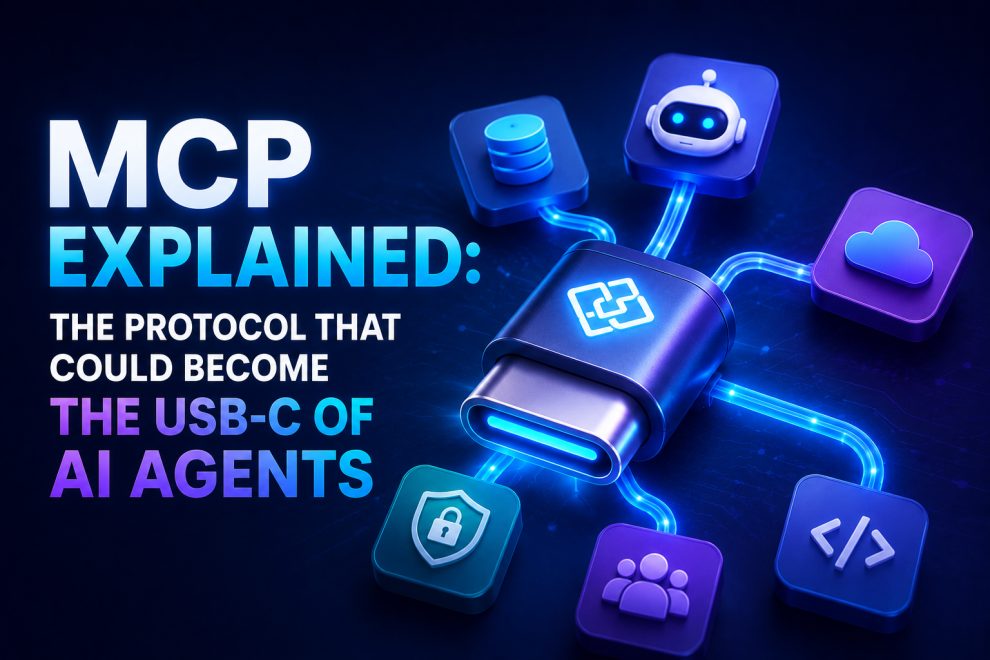
Originally introduced as an open protocol, MCP is designed to standardize how AI models and agents connect with external systems, tools, applications, and data sources. Many developers now describe MCP as the “USB-C layer” for AI ecosystems — not because it makes AI smarter, but because it could make AI systems interoperable.
Interoperability is quickly becoming one of the largest barriers to scaling AI initiatives across business units.
AI Infrastructure Is Becoming More Fragmented
Most enterprises initially approached AI adoption as a model selection problem. Leadership teams focused heavily on choosing between language models, cloud providers, copilots, and inference strategies. But after the first wave of deployments, organizations encountered a different reality: the real challenge was orchestration complexity.
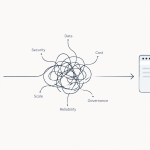
A modern enterprise AI environment now typically includes multiple language model providers, vector databases, internal APIs, workflow automation systems, customer platforms, compliance tools, identity and access management layers, and analytics services operating simultaneously.
Every AI deployment introduces another integration point. Customer support bots need CRM access. Engineering copilots require repository permissions. Financial assistants demand governance controls. Internal AI agents need access to enterprise search systems, ticketing platforms, and knowledge repositories.
Without a standardized communication layer, engineering teams repeatedly rebuild integration workflows across departments. This creates three major operational problems:
- Slower AI Deployment Cycles – Teams continuously build custom connectors and orchestration logic, slowing implementation timelines.
- Inconsistent Governance – Permissions, access models, and security controls vary across implementations, increasing governance complexity.
- Reduced Scalability – AI integrations become difficult to maintain as enterprise ecosystems grow larger and more interconnected.
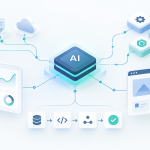
This is the environment MCP is attempting to simplify. Instead of every AI application creating proprietary integration approaches, MCP introduces a standardized protocol for connecting models and tools through a consistent interaction layer.
That standardization matters because enterprise AI adoption is no longer confined to innovation labs. It is becoming part of operational infrastructure.
Why Engineering Leaders Are Paying Attention to MCP
The reason MCP is generating enterprise interest is not because executives suddenly care about protocols. They care about integration costs.
Large enterprises already operate highly fragmented technology environments. AI expansion risks multiplying that fragmentation unless organizations establish interoperability standards early.
MCP addresses this challenge by creating a shared structure for how AI systems:
- Request tools
- Retrieve context
- Access resources
- Interact with external services
In practical terms, this means AI agents can potentially connect to enterprise systems more consistently without requiring entirely custom orchestration for every deployment scenario.
For engineering leaders, the implications are significant. A standardized interaction protocol could reduce engineering overhead across:
- Internal AI copilots
- Multi-agent workflows
- Customer service automation
- Knowledge management systems
- Engineering productivity platforms
- Enterprise search applications
- AI-powered analytics environments
This is particularly important for organizations already struggling with AI governance and operational visibility.
The issue is not a lack of AI tooling. The issue is architectural coordination.
MCP’s growing relevance comes from the possibility that enterprises may finally get a standardized way to connect AI systems across distributed operational environments without rebuilding integration layers repeatedly.
That is why many engineering and platform leaders increasingly compare MCP to USB-C. USB-C did not eliminate devices or operating systems. It reduced connection friction between them. MCP aims to solve a similar problem for AI ecosystems.
The Bigger Enterprise Challenge: AI Operationalization
Most enterprise AI conversations still focus heavily on models. But operational leaders are increasingly shifting attention toward infrastructure maturity instead.
The critical question is no longer: Which model performs best?
The more important question is: How can enterprises operationalize AI systems reliably across business functions without creating long-term architectural instability?
That shift changes how organizations evaluate AI readiness. Enterprises now need to think about:
- AI governance frameworks
- Permission orchestration
- Tool interoperability
- Workflow reliability
- Cross-platform integrations
- Context-sharing mechanisms
- Monitoring and observability
- Security enforcement across AI agents
Protocols like MCP become strategically relevant because they address operational coordination rather than raw model intelligence.
This becomes even more important as enterprises move toward multi-agent systems. Many organizations are now experimenting with AI agents handling independent workflows simultaneously across engineering, customer support, operations, and analytics environments.
Without interoperability standards, those systems can quickly become difficult to govern.
The situation resembles the early cloud adoption era, when organizations accumulated disconnected software platforms faster than integration strategies could mature. Engineering leaders do not want enterprise AI ecosystems repeating that pattern at an even larger scale.
That explains why infrastructure-oriented AI discussions are accelerating across enterprise technology teams.
MCP Adoption Will Depend on Ecosystem Support
Despite growing momentum, MCP is still early in its enterprise lifecycle. The protocol’s long-term success will depend heavily on:
- Ecosystem participation
- Tooling maturity
- Security implementation models
- Cloud platform support
- Governance compatibility
- Workflow orchestration maturity
- Developer adoption
- Long-term interoperability standards
Enterprises are unlikely to adopt MCP solely because it is technically promising. They will adopt it if it measurably reduces deployment complexity.
For many organizations, the immediate opportunity is not large-scale MCP migration. It is experimentation.
Engineering and platform teams are increasingly exploring where standardized AI interaction layers can reduce operational friction inside existing ecosystems.
That exploration phase is also creating demand for implementation partners capable of understanding AI workflows alongside platform engineering realities.
For enterprise technology leaders, that distinction matters.
AI success in the coming years will depend less on standalone model adoption and more on how effectively organizations integrate AI into operational systems that already exist.
That is why protocols like MCP are attracting attention far beyond developer communities. They represent an attempt to solve one of the largest emerging problems in enterprise AI infrastructure: interoperability at scale.
And if enterprise adoption accelerates the way many platform leaders expect, MCP may eventually become less of a technical protocol discussion and more of a foundational layer for how enterprise AI systems communicate altogether.









Add Comment